Gravitational waves expand their horizons as scientists listen to 'ringing' black holes
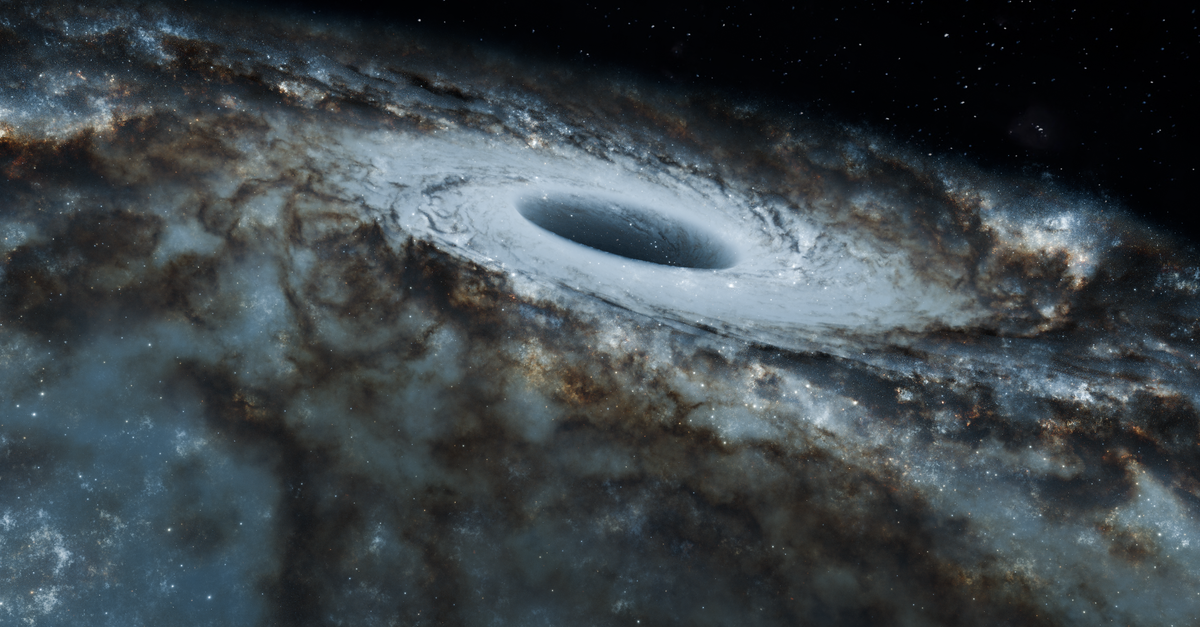
- A 1971 prediction by Stephen Hawking has been confirmed using gravitational waves from a black hole merger 1.3 billion light-years away.
- Gravitational wave research is expanding beyond detection to 'listening' to ringing black holes.
- Super-loud gravitational waves offer new ways to study black hole event horizons.
- Concerns arise over America's potential withdrawal from leading gravitational wave research.
Hawking's theorem confirmed by cosmic collision
In 1971, Stephen Hawking proposed that the event horizon of a black hole can never shrink. For decades, the idea remained a theoretical curiosity. Now, gravitational waves from a collision 1.3 billion light-years away have confirmed that prediction.
The merger involved two black holes spiraling into each other. Scientists measured the area of the event horizon before and after the collision. The results matched Hawking's theorem exactly. It is a rare moment when a half-century-old idea meets direct observational proof.
Listening to the 'ringing' of black holes
Gravitational wave astronomy has moved beyond detection. Researchers are now focusing on the 'ringing' that happens right after a black hole merger. This ringing is a vibration in spacetime itself, akin to a struck bell.
By analyzing these vibrations, scientists can extract information about the black hole's mass and spin. The technique is called black hole spectroscopy. It allows astronomers to test Einstein's general relativity under extreme conditions that cannot be replicated on Earth.
Super-loud gravitational waves offer another frontier. These powerful signals could reveal details about the event horizon that were previously hidden. They might even show whether black holes behave exactly as predicted.
Event horizons under the microscope
Event horizons are the boundaries beyond which nothing, not even light, can escape. Studying them directly has been impossible. Gravitational waves change that. They carry information from the very edge of the black hole.
Scientists are now using these waves to probe the structure of event horizons. If there are deviations from Einstein's theory, they would show up in the data. So far, general relativity has passed every test. But the search for cracks continues.
America's role in gravitational wave research
The United States pioneered this field with the Laser Interferometer Gravitational-Wave Observatory, or LIGO. LIGO made the first direct detection in 2015. It has since transformed astronomy.
But there are concerns that America may now leave the field behind. Funding uncertainties and shifting priorities could slow progress. Other nations, including India and Japan, are building their own detectors. The global race to capture gravitational waves is accelerating.
India's LIGO-India project is expected to come online later this decade. It will add a crucial third node to the detection network, improving the ability to pinpoint sources. The future of gravitational wave astronomy may depend on international collaboration.
What happens next
Researchers are now planning more sensitive detectors, both on the ground and in space. The next generation of instruments could pick up signals from the early universe. Every new observation will refine the picture of how black holes behave.