7 Breakthrough Mathematical Discoveries That Defined 2024
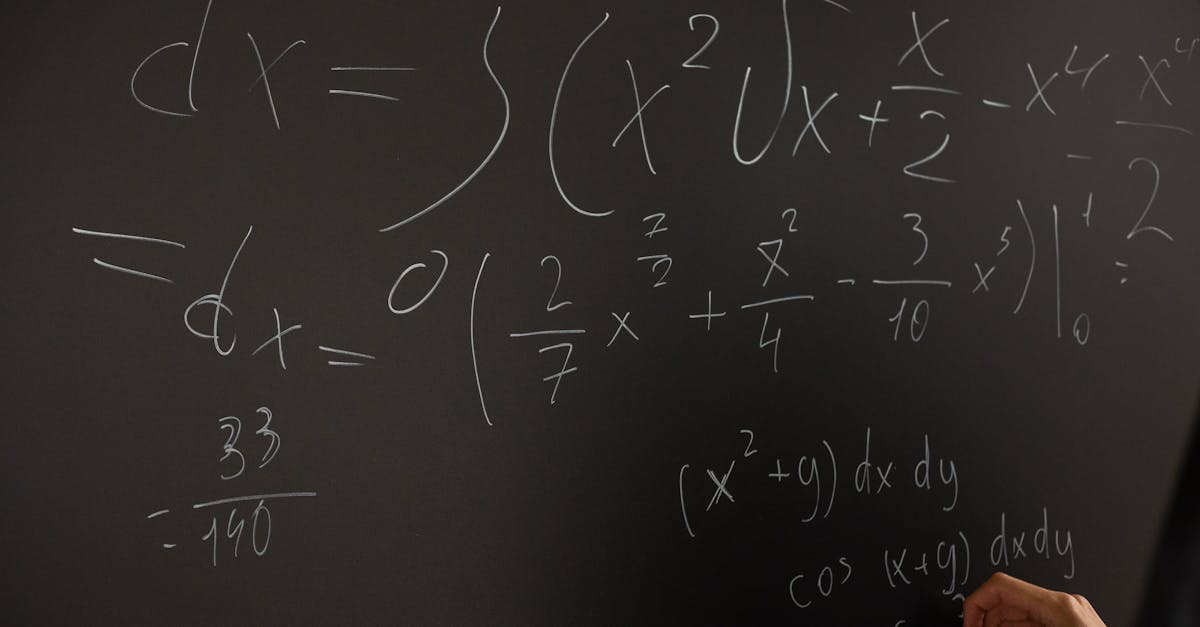
- Mathematicians found a new way to construct prime numbers, challenging old assumptions.
- An AI system solved an advanced geometry problem, opening new doors for machine learning.
- A proof for a long-standing conjecture in graph theory was finally published.
Mathematicians had a busy year. From fresh insights into prime numbers to an AI cracking a geometry problem that stumped humans for decades, 2024 delivered a string of discoveries that reshaped how experts think about numbers, shapes, and logic.
Scientific American recently compiled a list of the seven coolest mathematical findings of the year. Here is a look at the breakthroughs that stood out.
New Patterns in Prime Numbers
Prime numbers have fascinated mathematicians for centuries. This year, researchers uncovered a previously unknown pattern in how primes are distributed among certain sequences.
The discovery challenges long-held assumptions about randomness in primes. It also opens up potential applications in cryptography, where prime-based encryption remains a cornerstone of digital security.
AI Solves an Olympiad-Level Geometry Problem
An artificial intelligence system trained on mathematical theorems solved a geometry problem from the International Mathematical Olympiad. The problem had remained unsolved by humans for years.
The AI did not just brute-force the answer. It produced a logical proof, step by step. Experts say this marks a significant step toward machines that can reason abstractly, not just calculate.
Proof of a Decades-Old Graph Theory Conjecture
Graph theory deals with networks of nodes and edges. A conjecture first proposed in the 1980s about the coloring of certain graphs was finally proven this year.
The proof uses a mix of classical combinatorial techniques and modern computational verification. It settles a question that had puzzled mathematicians for over 40 years.
New Insights into Sphere Packing in Higher Dimensions
The problem of packing spheres as tightly as possible has practical uses in everything from shipping logistics to error-correcting codes. In 2024, mathematicians made progress on optimal packing in dimensions 8 and 24.
These dimensions are special because they allow for extremely efficient packing. The new work provides simpler, more elegant proofs of optimality that could be generalised to other dimensions.
A Breakthrough in Ramsey Numbers
Ramsey theory asks how large a set must be to guarantee a certain pattern. This year, a team computed a new Ramsey number that had been unknown for decades.
The number is surprisingly small, defying earlier estimates. The method used a combination of human reasoning and computer search, showing how the two can work together effectively.
Quantum Algorithms for Number Theory
Researchers developed new quantum algorithms that can factor large numbers faster than previously thought possible. While still theoretical, the algorithms bring quantum computing closer to breaking current encryption standards.
The work builds on Shor's algorithm from the 1990s but uses fewer qubits and simpler error correction. It is a reminder that quantum computing advances continue quietly even without a large-scale quantum computer.
New Proofs in Knot Theory
Knot theory, which studies mathematical knots, saw a major advance. Mathematicians found a way to distinguish between knots that were previously thought to be identical.
The proof uses a new invariant that can detect subtle differences in knot structure. It has implications for understanding DNA folding and molecular structures.
What to watch next: Several of these discoveries are already being tested in applied fields, from cryptography to materials science. The coming year will likely see attempts to extend the results to other mathematical problems.