2.56-Billion-Year-Old 'Orbicular' Rock Found in Madhya Pradesh Is Earth's Second-Oldest
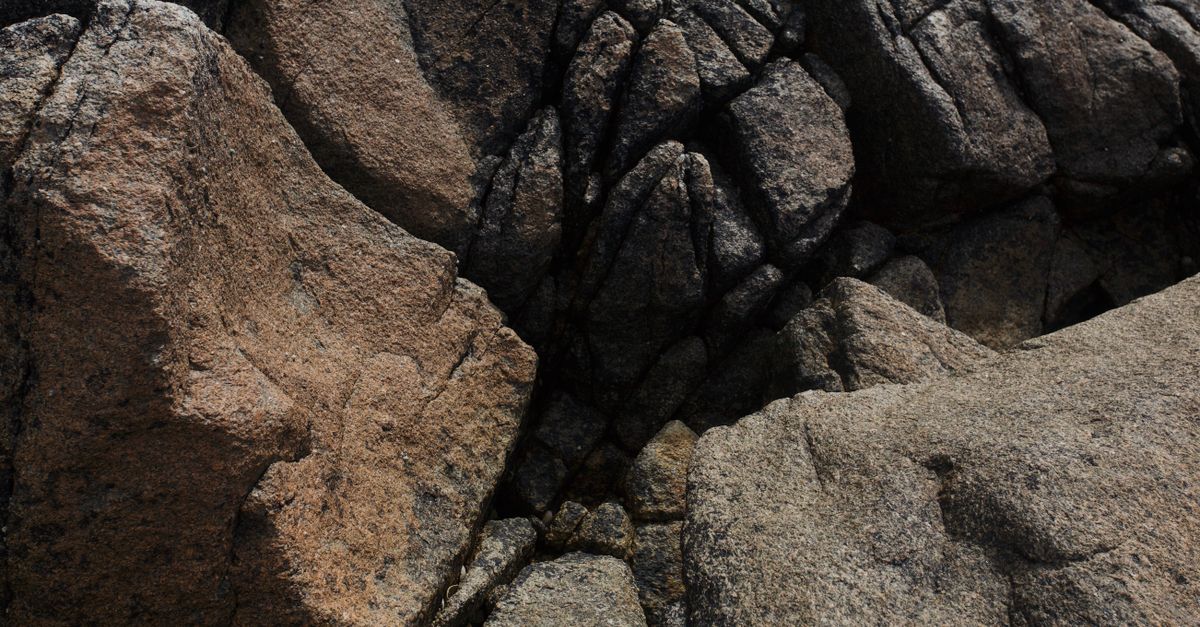
- The Pichhore granite in Madhya Pradesh has been dated to 2.56 billion years, second-oldest orbicular rock on Earth.
- Orbicular granites are extremely rare, formed when magma cools in concentric layers around a nucleus.
- The site is threatened by agricultural expansion, raising concerns among geologists about preservation.
Deep in Madhya Pradesh, a chunk of rock that has sat quietly for over two and a half billion years is now making headlines. Geologists have confirmed that the Pichhore granite near Shivpuri is the second-oldest orbicular rock on Earth.
Dated at 2.56 billion years, the formation is only younger than a similar orbicular granite found in Greenland. The discovery was published in the Journal of Earth System Science by researchers from the Indian Institute of Technology (IIT) Kharagpur and the Geological Survey of India.
What Makes Orbicular Granite So Rare
Orbicular granites are not your everyday rocks. Unlike standard granite, which forms from cooling magma in relatively uniform crystals, orbicular granite develops in concentric layers around a central nucleus. Think of it as a geological onion — but one that took billions of years to cook.
These spheres, called orbicules, can range from a few millimetres to several centimetres in diameter. The process requires very specific conditions: the magma must cool slowly enough for minerals to crystallise in rings, but with occasional influxes of fresh melt to create the layered structure. That combination is exceptionally rare.
Globally, fewer than 50 orbicular granite occurrences have been documented. The Pichhore find puts India on that shortlist.
A Window into Earth's Early Crust
The Pichhore rock is more than a geological curiosity. Scientists say it offers a rare window into the processes that shaped Earth's crust during the Archean Eon, a period when the planet was still young and continents were just beginning to form.
Lead researcher Dr. Swapan Kumar Biswas from IIT Kharagpur told The Times of India that the rock's mineral composition and texture suggest it formed deep within a stable continental nucleus, known as a craton. "The preservation of such delicate textures over 2.5 billion years is extraordinary," he said.
The study used uranium-lead dating on zircon crystals extracted from the granite to pin down its age. Zircon is a hardy mineral that acts like a tiny clock, recording the time since it crystallised.
Threats from Agriculture and Development
The Pichhore formation is not in a protected national park or a remote mountain. It sits in an area increasingly encroached upon by farms and small-scale mining. Local geologists have flagged the need for conservation measures before the site is damaged beyond study.
Agricultural expansion has already disturbed parts of the outcrop. Ploughing and soil removal can break the delicate orbicules, which lose their scientific value once separated from their geological context. Researchers are pushing for the site to be declared a protected geoheritage site under the Geological Survey of India's framework.
- The site spans roughly 2 square kilometres of exposed granite.
- Orbicules vary in size from pea-sized to grapefruit-sized.
- The rock contains minerals like feldspar, quartz, and biotite arranged in rings.
What Comes Next
The team plans to conduct a detailed geochemical analysis of individual orbicules to understand the exact sequence of magma pulses that created them. They also hope to scan the surrounding region for similar formations.
For now, the Pichhore granite stands as a quiet monument to Earth's infancy — one that needs protection if it is to keep telling its story for another billion years.