Dark Comet Hid in Plain Sight, Came Within 2 Million Miles of Earth
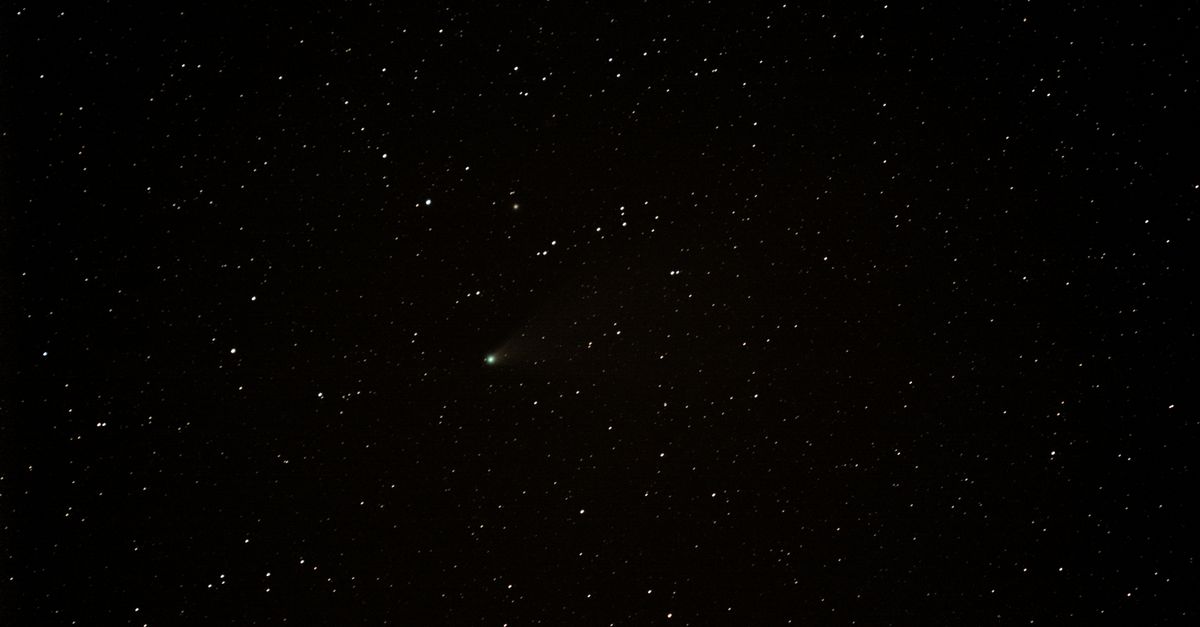
- Object tracked since 1998 was thought to be an asteroid, but new NASA analysis confirms it is a hidden comet.
- The dark comet passed within 2 million miles of Earth, a relatively close shave in astronomical terms.
- An unexplained orbital shift in the object's path led astronomers to re-examine its true nature.
For nearly three decades, astronomers kept an eye on a near-Earth object that seemed unremarkable. Tracked since 1998, it was catalogued as an asteroid, one of many rocky bodies drifting through the solar system. But a recent pass within 2 million miles of Earth has rewritten its identity.
NASA scientists now confirm the object is not an asteroid at all. It is a dark comet — a type of comet that lacks the bright, glowing tail typically associated with such bodies. The discovery solves a mystery that has puzzled researchers for years.
What Makes a Comet 'Dark'?
Most comets are known for their spectacular tails, formed when ice sublimates as the object nears the Sun. Dark comets, however, have little to no visible outgassing. They appear as faint, almost featureless points of light, making them easy to mistake for asteroids.
This particular object's true nature only came to light after astronomers noticed something odd. Its orbit had shifted in a way that could not be explained by gravitational forces alone. That anomaly pointed to a non-gravitational force — likely weak outgassing from buried ice — pushing the object off course.
An Orbital Shift That Raised Questions
The unexplained orbital shift was the key clue. According to reports, the change in trajectory was small but significant. Non-gravitational forces, such as the gentle push from sublimating ice, are common among comets but rare for asteroids.
NASA's reanalysis of the object's composition and behaviour confirmed the presence of ice. The object is now officially classified as a dark comet, ending decades of misidentification. The close approach of 2 million miles, while safe, highlights how easily such objects can go undetected.
Implications for Planetary Defense
The case underscores a blind spot in current asteroid detection methods. Traditional surveys look for rocky bodies by their reflected sunlight. Dark comets, with their low albedo and lack of a tail, can slip through the net.
This object's proximity to Earth — roughly eight times the distance to the Moon — is a reminder that not all near-Earth objects are what they seem. Scientists are now calling for improved observational techniques that can distinguish between asteroids and dark comets more reliably.
“It's a wake-up call,” one researcher noted in the findings. “If we misclassify an object, we misjudge its behaviour. That matters when you're talking about objects that come this close.”
The Road Ahead
NASA and other space agencies are expected to refine their classification algorithms. The discovery also adds urgency to missions like the Near-Earth Object Surveyor, a space-based telescope designed to spot hidden threats.
For now, the dark comet continues its journey through the inner solar system. Its next approach will be closely watched — and this time, astronomers know exactly what they are looking at.