Milky Way flipped on its side after ancient collision, astronomers find
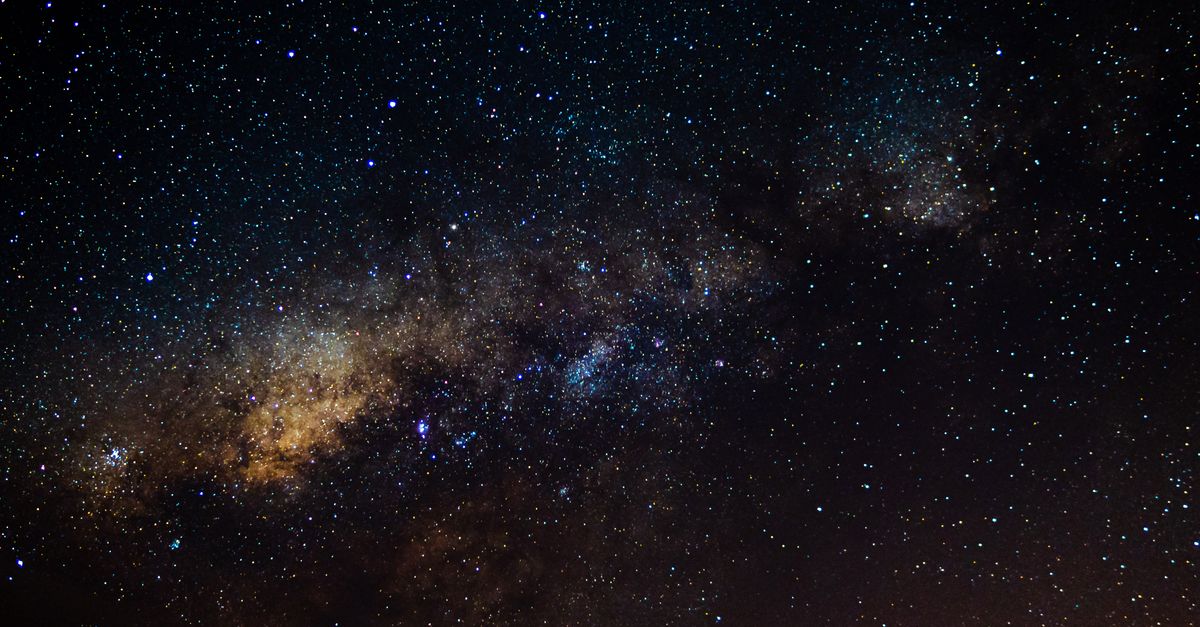
- Collision with Gaia-Sausage-Enceladus dwarf galaxy occurred 10 billion years ago
- Impact caused Milky Way's stellar halo to flip over
- Discovery based on data from European Space Agency's Gaia telescope
Cosmic Collision That Reshaped Our Galaxy
Ten billion years ago, the Milky Way experienced a violent crash that literally flipped it on its side. A team of astronomers has now confirmed that our home galaxy underwent a dramatic flip after smashing into a dwarf galaxy called the Gaia-Sausage-Enceladus.
The new findings, published in the Monthly Notices of the Royal Astronomical Society, offer a fresh look at how galactic collisions can reshape entire star systems. Researchers used data from the European Space Agency's Gaia space observatory to track the motion of millions of stars in the Milky Way's halo.
A Sausage-Shaped Intruder
The dwarf galaxy involved in the collision was no ordinary neighbour. Named the Gaia-Sausage-Enceladus for its elongated, sausage-like shape, this small galaxy ploughed into the Milky Way with enough force to tilt our galaxy's entire structure.
Scientists have long suspected that the Milky Way's halo — the spherical region of stars and gas surrounding the galaxy's bright disk — was not always oriented the way it is today. The new analysis provides the clearest evidence yet that a single, massive collision was responsible.
Lead author Dr Rohan Naidu, an astrophysicist at the Harvard-Smithsonian Center for Astrophysics, said the collision was so powerful that it 'flipped the Milky Way's orientation relative to its surrounding stellar halo.' The team's simulations showed that the impact sent the galaxy wobbling before it settled into its current configuration.
How Astronomers Traced the Flip
The breakthrough came from studying the motion of stars in the Milky Way's halo. Using Gaia's precise measurements, the team found two distinct populations of stars moving in opposite directions. One group appeared to be native to the Milky Way, while the other was composed of stars stripped from the dwarf galaxy during the collision.
By mapping these trajectories, researchers concluded that the Milky Way's disk had essentially flipped over relative to its halo. Think of it like a spinning top that gets knocked sideways and then rights itself — except this top took billions of years to stabilise.
The Gaia satellite, launched by the European Space Agency in 2013, has been instrumental in mapping the positions and movements of nearly two billion stars. Its data has already transformed our understanding of the Milky Way's violent past.
What This Means for Understanding Galaxy Formation
The discovery adds to a growing body of evidence that major collisions were common in the early universe. The Milky Way, like most large galaxies, grew by consuming smaller neighbours. The Gaia-Sausage-Enceladus collision is one of the most significant events in our galaxy's history.
Dr Naidu noted that such collisions may have been essential in shaping the structure of modern galaxies. 'Without this event, the Milky Way might look very different today,' he said. The findings also help explain why the Milky Way's halo contains stars with unusual orbits and chemical compositions.
Astronomers now plan to search for similar 'fossil' signatures in other galaxies to see if flipping is a common outcome of galactic mergers.
For now, the picture is clear: our galaxy was once turned on its side by a cosmic smash-up, and the scars of that ancient crash are still written in the stars today. The next step for researchers will be to pinpoint exactly when the wobbling stopped and the Milky Way settled into the stable disk we see from Earth.