50 Years Ago Today: Viking 1 Sent First Close-Up Photos From Mars Surface
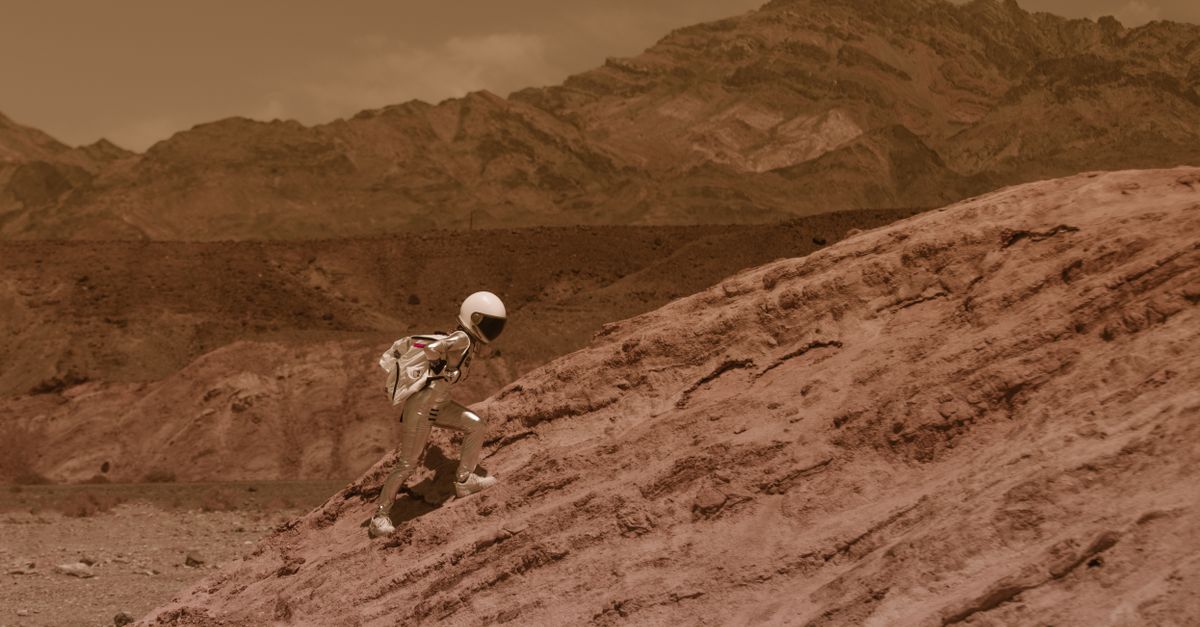
- Viking 1 landed on Mars on July 20, 1976, the first US mission to touch the surface.
- It sent back the first clear, high-resolution pictures from the Martian surface.
- The mission also conducted experiments searching for signs of microbial life.
- Viking 1 operated for over six years, far exceeding its planned 90-day mission.
First Footage from the Red Planet
Fifty years ago today, humanity got its first real glimpse of another world. On July 20, 1976, NASA's Viking 1 lander touched down on Mars and began transmitting the first close-up photographs ever taken from the surface of the red planet.
The images were grainy by today's standards, but for scientists and the public in 1976, they were a revelation. They showed a rocky, rust-coloured landscape strewn with boulders and fine red dust. The sky, they revealed, was a pinkish hue—not the blue of Earth.
From Archive to Anniversary
Archives from that July day in 1976, as reported by The Hindu, captured the global excitement: “Viking craft lands on Mars, sends back clear pictures.” The landing ended a tense descent. Viking 1 had been launched nearly a year earlier, on August 20, 1975, and travelled over 400 million miles.
The lander carried a suite of scientific instruments, including a robotic arm to scoop soil samples and three biological experiments designed to detect life. The results were ambiguous. Some tests showed chemical reactions that mimicked metabolism, but no organic molecules were confirmed. The question of whether Viking 1 found signs of life remains debated by scientists to this day.
A Legacy of Exploration
Viking 1 was not just a photo-op. It operated on the Martian surface for six years and 116 days—until November 13, 1982—far outlasting its planned 90-day mission. It sent back more than 1,400 images and vast amounts of weather and soil data.
That mission paved the way for everything that followed. From NASA's rovers like Sojourner, Spirit, Opportunity, and Curiosity, to India's Mangalyaan orbiter, which reached Mars in 2014. The Indian Space Research Organisation's (ISRO) Mars Orbiter Mission was notable for its low cost and success on a first attempt.
What Happens Next
Today, NASA's Perseverance rover is collecting rock samples for a future return to Earth. China's Tianwen-1 mission continues to explore from orbit and surface. The legacy of Viking 1—the first close-up look at Mars—is still visible in every new image and data point these missions send back.