Blood Falls in Antarctica Kept Its Secret for Over 100 Years
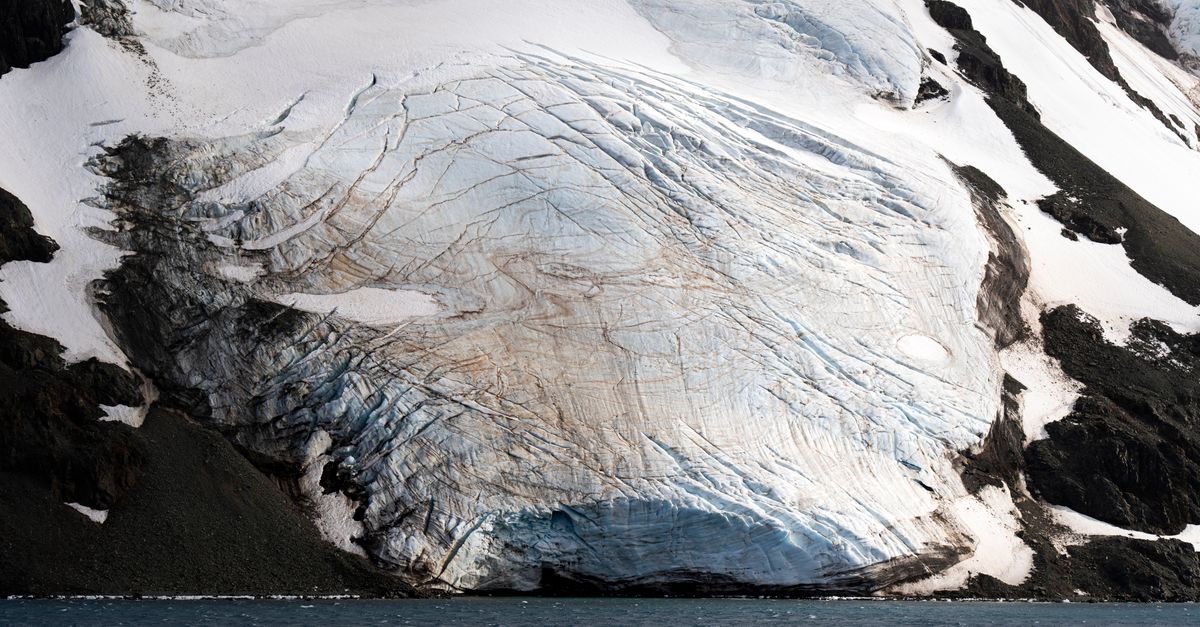
- Blood Falls in Antarctica's Taylor Valley has baffled scientists since its discovery in 1911.
- The red colour comes from iron-rich brine, not algae as once thought.
- Researchers found a subglacial brine aquifer that has been sealed for millions of years.
For more than a century, a waterfall in Antarctica that looks like a bleeding wound in the ice has puzzled explorers and scientists alike. The crimson cascade, known as Blood Falls, pours from the Taylor Glacier into a frozen lake. Its source remained a mystery since British geologist Griffith Taylor discovered it in 1911. Now, researchers say they have finally solved the puzzle.
The Red Stain That Refused to Explain Itself
Blood Falls lies in the McMurdo Dry Valleys, one of the harshest deserts on Earth. The water that emerges is a deep red, staining the white ice like a gash. Early explorers thought the colour came from red algae. That explanation stuck for decades, even as later studies found no evidence of the algae.
The real answer is far older and stranger. The water is brine — extremely salty water — rich in dissolved iron. When that iron hits the surface air, it oxidises. The same chemical reaction that turns a rusty nail orange creates the waterfall's blood-red hue.
A Hidden Ocean Under the Ice
Scientists from the University of Alaska Fairbanks and other institutions have now traced the water source. Using radio-echo sounding, they mapped a network of brine channels beneath Taylor Glacier. The brine comes from a subglacial aquifer that has been sealed under the ice for at least 1.5 million years.
That ancient pool is kept liquid by the pressure of the glacier above and by the heat released from the chemical reactions within the brine itself. It is a completely dark, oxygen-free environment. The microbes that live there survive without sunlight, feeding on sulphate and iron.
Why This Matters Beyond a Blood-Coloured Tourist Spot
Blood Falls is more than a geological oddity. It is a natural laboratory for understanding how life can exist in extreme conditions. The microbes in the brine are chemolithotrophs — organisms that get their energy from inorganic chemicals. They do not need sunlight or organic matter.
This is exactly the kind of environment that scientists think could exist on Mars or on the icy moons of Jupiter and Saturn. Europa and Enceladus have subsurface oceans sealed under kilometres of ice. If life can survive in the briny darkness under Taylor Glacier, it might survive out there too.
What the Research Found
The team published their findings in the Journal of Geophysical Research: Biogeosciences. They confirmed that the brine is trapped in a system of cracks and fissures in the glacier. The water moves slowly under pressure, occasionally reaching the surface at the glacier's snout.
Once exposed to air, the iron-laced water turns red within seconds. The waterfall is not constant. It flows only during certain weather conditions and at specific times of the year. That is why it took so long to find the source — the brine reservoir is deep and the flow is intermittent.
What Happens Next
Researchers plan to drill into the brine system to sample the ancient water directly. They want to study the microbes and the chemistry of a world that has been sealed away since before humans existed. The secret of Blood Falls is out, but the questions it raises about life in the universe are only beginning.