NASA finds blue planet 63 light-years away but its colour is from glass, not water
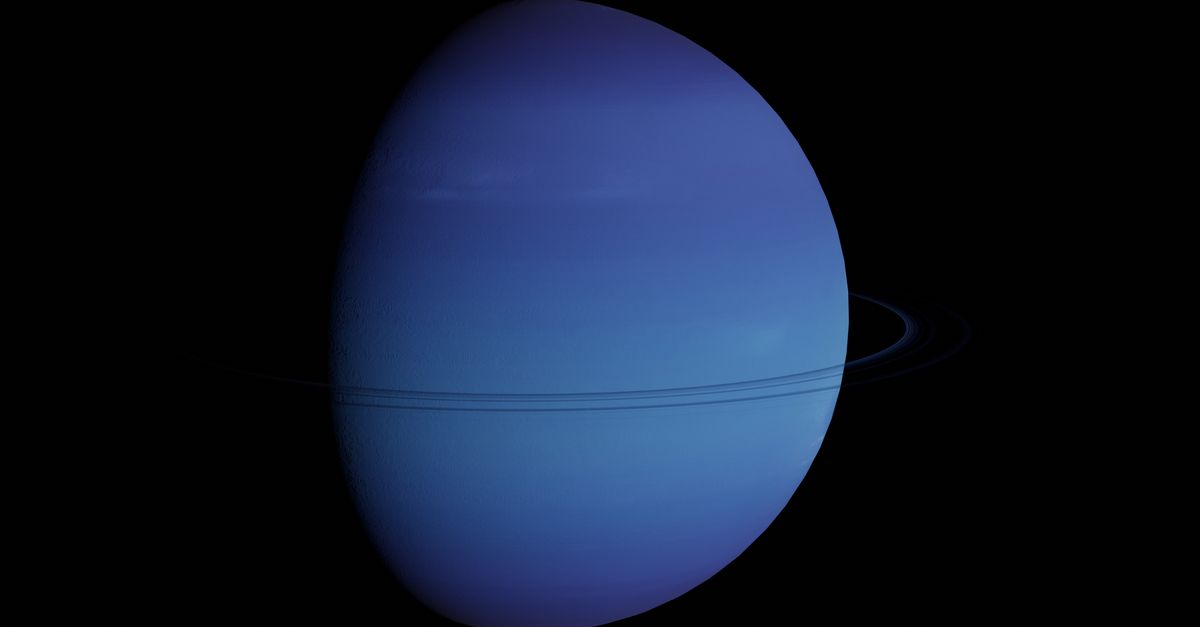
- Planet appears deep blue like Earth from space, but colour is from silicate particles, not water
- Located 63 light-years away, the exoplanet has a scorching atmosphere
- Winds may reach 4,500 miles per hour, causing glass to rain sideways
A blue world unlike our own
NASA astronomers have identified a planet 63 light-years away that gleams a deep, vivid blue when viewed from space. The colour is so striking that it rivals Earth's own oceanic hue. But the similarity ends there.
This distant world's azure tint comes not from water, but from a sky filled with silicate particles—essentially tiny glass droplets. The discovery, reported by The Times of India, adds a dramatic new entry to the catalog of strange exoplanets.
Glass rain and hurricane winds
The planet orbits extremely close to its parent star, resulting in surface temperatures that can melt lead. In such heat, minerals vaporise, condense into tiny glass particles, and scatter blue light. That scattering creates the deep blue colour seen by telescopes.
But the conditions are even more extreme. The atmosphere is likely superheated, with winds screaming at up to 4,500 miles per hour. At those speeds, the glass particles wouldn't just drift—they'd rain sideways, turning the sky into a horizontal storm of molten shards.
How scientists see the colour
Astronomers used spectroscopic analysis to determine the planet's colour and atmospheric composition. Light filtering through the exoplanet's atmosphere revealed the signature of silicate particles. Unlike Earth, where water molecules absorb red light and reflect blue, this world's blue comes from scattering by fine glass dust.
The planet is a gas giant, not a rocky world like ours. It likely has no solid surface, just layers of atmosphere that grow denser toward a core. Any spacecraft attempting entry would be crushed and torn apart by the pressure and winds.
Why this matters
The discovery helps scientists understand the huge variety of planetary environments in the universe. It also serves as a cautionary tale: a blue planet does not mean a habitable one. The search for Earth-like worlds must look beyond colour alone.
Researchers are now studying similar exoplanets to see if this glass-rain phenomenon is common. The techniques used here will help refine the hunt for truly Earth-like planets that might host water and life.
What comes next: NASA's next-generation space telescopes are expected to study this planet's atmosphere in greater detail, potentially revealing more about its bizarre weather patterns and chemical makeup.