Earth Sets New Spin Record: Sunday Was Shortest Day Since 1960
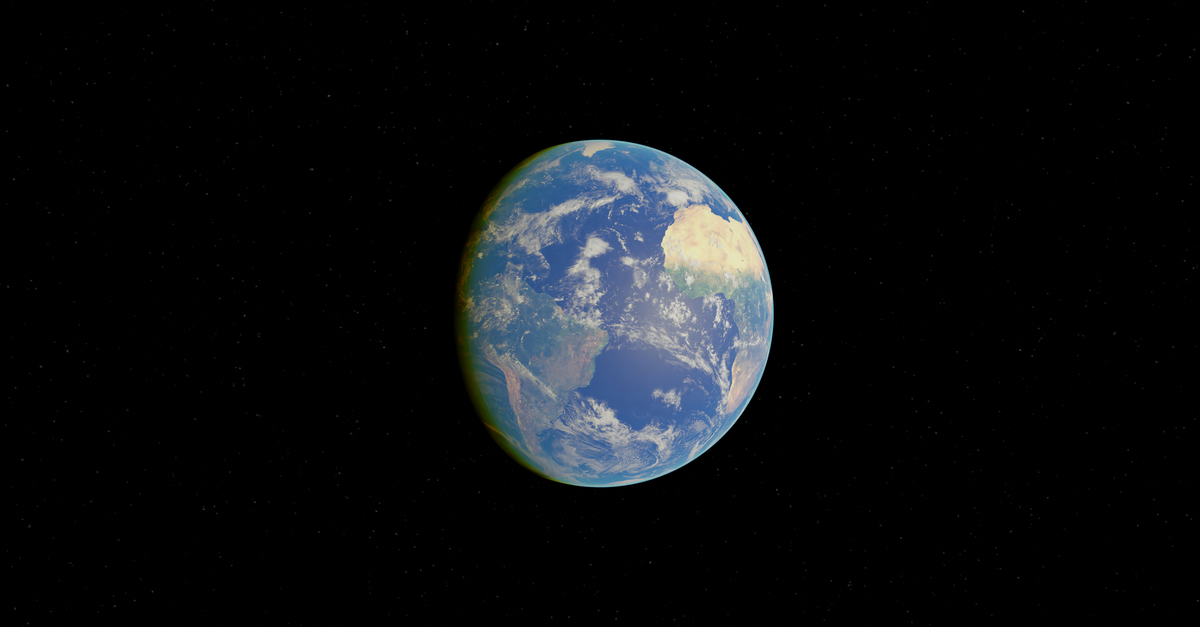
- July 22, 2026, was the shortest day since 1960 due to faster rotation.
- Earth's rotation speed has been increasing for decades, reversing a long-term slowdown.
- Scientists are studying the 'Chandler wobble' and other factors behind the speed-up.
This Sunday just gone — July 22, 2026 — was the shortest day on Earth in over 60 years. The planet completed one full rotation in less than the usual 86,400 seconds, according to precise atomic clock measurements.
The record, first reported by Forbes, marks a significant moment in a decades-long trend where Earth has been gradually spinning faster. For most of history, the planet's rotation had been slowing down, but that pattern reversed around 2020.
What Made July 22 So Short?
Atomic clocks, which keep time to billionths of a second, detected that Earth finished its spin a few milliseconds ahead of schedule. While that sounds tiny, it is enough to set a new benchmark in the scientific record.
The previous shortest day was recorded in 2020. Since then, Earth has routinely posted faster spins, but July 22 beat them all. Researchers note that this is not a one-off event but part of a sustained acceleration.
Why Is Earth Spinning Faster?
The exact cause is still under investigation. Scientists point to several possible factors. One leading theory involves the 'Chandler wobble' — a natural, periodic shift in Earth's axis of rotation, named after American astronomer Seth Carlo Chandler.
Other suspects include changes in the planet's core dynamics, melting polar ice sheets that redistribute mass, and even the motion of the oceans and atmosphere. No single explanation has been confirmed yet.
The 'Leap Second' Problem
This acceleration is creating a headache for timekeepers. Since the 1970s, the system of Coordinated Universal Time (UTC) has added 27 'leap seconds' to account for Earth's historic slowdown. Now, for the first time, scientists may need to introduce a 'negative leap second' — subtracting a second from global clocks.
Such a move would be unprecedented. It could cause disruptions in computer networks, financial markets, and satellite navigation systems that rely on exact time synchronisation.
What This Means for Daily Life
For ordinary people, a day shorter by a few milliseconds is imperceptible. You would not notice any change in sunrise or sunset times, and your phone's clock will remain accurate thanks to automatic adjustments.
However, the trend raises broader questions. If Earth continues to speed up, the need for timekeeping corrections will become more frequent. Global bodies like the International Earth Rotation and Reference Systems Service are monitoring the situation closely.
Officials have not yet confirmed whether a negative leap second will be required in the near future. They are also studying whether the current acceleration is temporary or a sign of a longer-term shift.
What to watch next: The scientific community is expected to meet later this year to decide on potential changes to the leap second system. Any decision will affect how technology around the world handles time from 2027 onward.