Chennai artisans weave elaborate floral offerings for goddesses
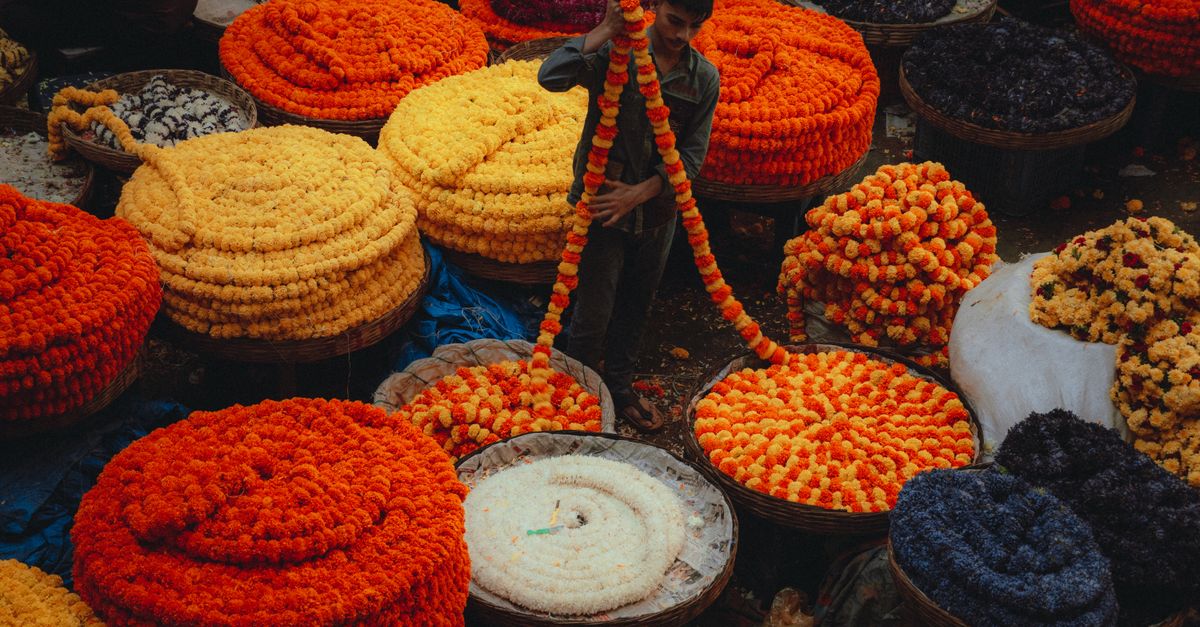
- Artisans in Chennai create elaborate floral garlands and decorations for temple goddesses.
- The process involves selecting fresh buds, threading them meticulously by hand.
- Each offering is a blend of skill, patience, and religious devotion.
- The tradition supports local flower markets and sustains generational livelihoods.
- Seasonal festivals drive peak demand for these intricate floral creations.
In the narrow lanes of Chennai's flower markets, before dawn breaks, the air fills with the scent of jasmine and marigold. Here, hands move with practiced precision, threading buds into elaborate patterns that will soon adorn temple deities. For generations, these artisans have turned fresh flowers into offerings that carry the prayers of thousands.
The craft is not merely decorative. Each garland, each floral curtain, is a silent act of devotion. The flowers, chosen for their fragrance and colour, are strung in specific sequences that hold symbolic meaning. White jasmine represents purity, red roses signify passion for the divine, and marigolds bring auspiciousness.
The rhythm of the hands
Work begins before sunrise. Artisans sit cross-legged on mats, piles of fresh buds beside them. Their fingers move quickly, threading needle and string through tender stems. A single long garland can take hours to complete, requiring thousands of individual flowers.
"Speed is important," says a senior artisan who has been at this work for over three decades. "But so is gentleness. If you bruise the petals, the offering loses its beauty." The finished pieces range from simple strands for home altars to massive, multi-layered curtains for temple sanctums.
From market to temple
Most flowers arrive from local farms around Chennai before dawn. The freshness is critical — wilted petals are rejected immediately. Artisans often work in family units, with children learning the craft by watching their elders. It is a skill passed down through generations, rarely written down.
The demand peaks during festival seasons. Navratri, for instance, sees a frenzy of activity. Temples place orders weeks in advance. Some artisans can earn up to Rs 3,000 a day during such periods, though ordinary days bring more modest earnings.
Preserving a fragile art
Yet the craft faces pressures. Younger generations often move toward more stable, better-paying jobs. The work is physically demanding — long hours sitting, constant hand strain, and exposure to flower pollen. Many artisans report allergies and back problems.
"My son works in an IT company now," says one artisan, threading a needle with yellow chrysanthemums. "He respects what I do, but he doesn't want to do it himself." The sentiment is common. Still, some young people are returning to the craft, drawn by its cultural significance and the growing market for handmade temple offerings.
Community and continuity
Local flower vendors play a key role. They source flowers from farmers, supply them to artisans on credit, and buy back the finished products. This informal system keeps the chain alive. Some NGOs have started training programs to document the techniques and help artisans market their work directly.
The city's temples remain the primary patrons. The Kapaleeshwarar Temple in Mylapore and the Parthasarathy Temple in Triplicane are among the largest buyers. Their annual festivals require thousands of garlands, keeping the craft thriving in a modernising city.
As the sun rises over Chennai, the first offerings are already being delivered. Bicycle carts loaded with fragrant strands make their way through traffic. In temple courtyards, priests receive the flowers with reverence, placing them at the feet of goddesses. The cycle begins again the next morning, before dawn.