Nandan Nilekani to Lead PM Modi's Task Force on Exam Reforms
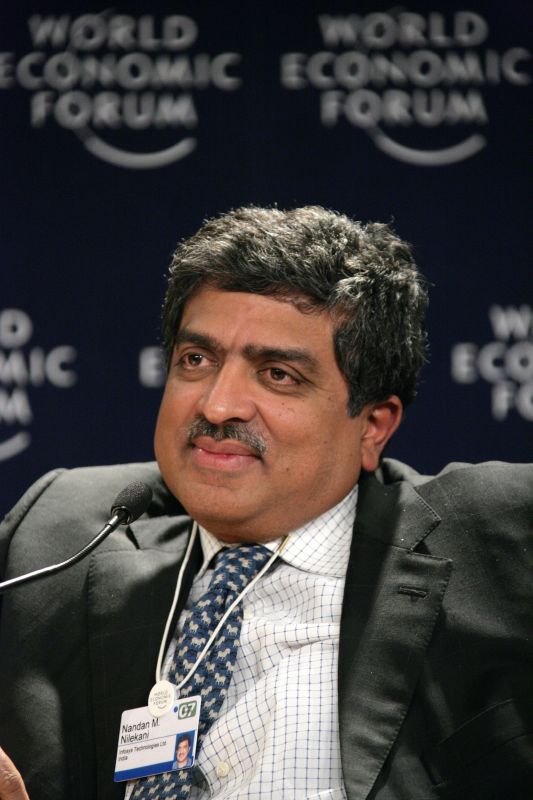
- Nandan Nilekani appointed chair of the High-Powered Task Force on Examinations by PM Modi.
- The task force aims to reform the National Testing Agency (NTA) and restore trust in exams like NEET.
- The move follows massive protests by medical aspirants over alleged paper leaks and mark discrepancies.
- Other members include education experts and bureaucrats; a report is expected in three months.
The Centre has tapped Infosys co-founder Nandan Nilekani to lead a new task force tasked with overhauling India's examination system. Prime Minister Narendra Modi announced the formation of the High-Powered Task Force on Examinations after weeks of protests by medical aspirants over irregularities in the NEET undergraduate exam.
The decision comes after thousands of students took to the streets in several cities, alleging paper leaks and discrepancies in marks. The controversy threatened to derail the admission process for medical colleges across the country.
Who Is on the Task Force?
Nilekani, who previously headed the Unique Identification Authority of India and built the Aadhaar platform, will chair the panel. Other members include senior bureaucrats from the Ministry of Education, the National Testing Agency (NTA), and domain experts in psychometrics and data analytics.
The task force has been given a three-month deadline to submit its recommendations. Its mandate includes suggesting measures to make the NTA more transparent, secure, and efficient.
Scope of Reforms
The panel will examine the entire examination lifecycle — from question paper setting to result declaration. It will propose technical solutions to prevent leaks, improve invigilation through AI and data analytics, and streamline the grievance redressal process.
The government has indicated that the reforms could also extend to other high-stakes exams conducted by the NTA, including JEE and CUET. Officials have not yet confirmed whether the task force will recommend scrapping the current system of centralised exams.
Background of the Crisis
The NEET UG 2026 exam saw over 24 lakh candidates compete for roughly 1.1 lakh seats. In June, reports surfaced of a question paper leak in parts of Bihar and Jharkhand, triggering a CBI probe. The NTA later announced a re-test for affected candidates, but protests continued.
Students demanded a re-examination for all candidates, citing unfair advantage for those who had prior access to the paper. The Supreme Court is also hearing multiple petitions related to the controversy.
Nilekani's Track Record
Nilekani brings considerable experience in building large-scale digital systems. His work on Aadhaar enrolled over 130 crore residents and became the backbone of India's direct benefit transfer scheme. He also led the technology stack for GST and the Unified Payments Interface (UPI).
However, critics point out that Aadhaar itself faced privacy challenges and data breach concerns. The task force will need to address similar trust issues in the examination ecosystem.
The Wire and ThePrint have questioned whether the task force will merely tweak the NTA's processes or fundamentally rethink the idea of centralised exams. The panel's final report is expected to shape the future of student assessments in India.
What to watch: The task force's interim recommendations could be announced within six weeks, with the final report due by late October. All eyes will be on whether Nilekani's panel proposes a radical shift away from the current high-stakes, single-exam model.