Hubble Data Reveals Sharp Slowdown in Andromeda Galaxy Star Formation
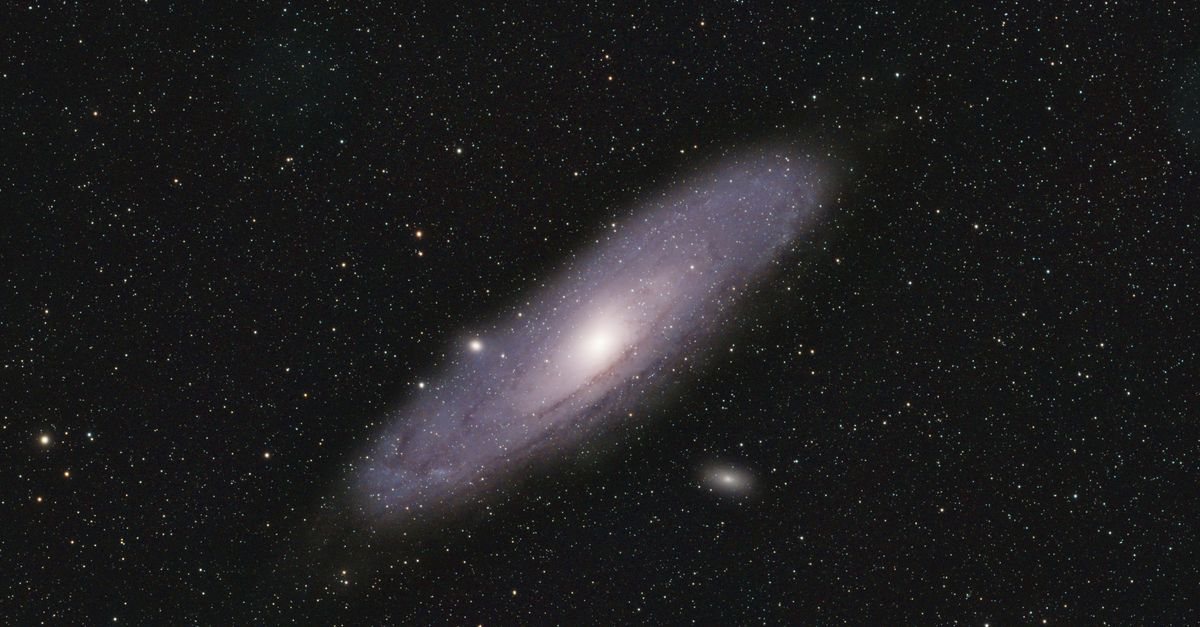
- Hubble data reveals Andromeda's star formation rate has dropped sharply over 500 million years.
- The galaxy is transitioning from a burst of star birth to a quieter middle-age phase.
- Findings offer clues about Andromeda's eventual collision with the Milky Way.
New data from NASA's Hubble Space Telescope has delivered a clear picture of the Andromeda Galaxy's changing fortunes. Star formation across our nearest large galactic neighbour is slowing down at a dramatic pace.
The study, based on observations collected over several years, shows that the galaxy's stellar birthrate has been declining for the past 500 million years. Andromeda, once a powerhouse of new star creation, is now winding down.
A Galaxy in Transition
Andromeda, also known as M31, is a spiral galaxy located about 2.5 million light-years from Earth. For decades, astronomers viewed it as a younger, more active counterpart to the Milky Way. The new Hubble data challenges that picture.
Researchers mapped the galaxy's star formation history by analysing the light from thousands of star clusters. They found that Andromeda experienced a burst of star formation roughly 500 million years ago. That burst has since faded, and the galaxy's overall star production is now at a fraction of its peak level.
The slowdown is not subtle. The rate of new star formation has dropped by more than a factor of ten in the last half-billion years. Scientists describe this as a clear sign that Andromeda is entering what they call a "middle-age" phase.
What Drives the Decline?
Hubble's sharp eyes allowed scientists to peer into Andromeda's dense central regions. They observed that the galaxy's reservoir of cold gas — the raw material for making stars — is being depleted. Without fresh gas inflows, the stellar nursery is running dry.
Another factor is the galaxy's own internal dynamics. Andromeda's bar-shaped structure in its centre may have funnelled gas inward, triggering the earlier burst of star birth. That same process may have consumed the available gas, leaving little for future generations of stars.
Astronomers have not ruled out interactions with neighbouring dwarf galaxies. Gravitational tugs from these smaller companions could have stirred up Andromeda's gas, accelerating star formation in the past. The same encounters might have also stripped away some of the galaxy's gas supply.
Implications for the Milky Way Collision
Andromeda and the Milky Way are on a collision course. The two galaxies are expected to merge in about 4.5 billion years. The new findings add detail to that eventual merger scenario.
If Andromeda's star formation continues to decline, it will be a quieter, less energetic galaxy when the merger begins. That could affect the amount of gas and dust available for new star formation during the collision. The merger might still trigger a fresh burst of stellar birth, but the raw materials may be scarcer than previously thought.
Hubble's data also helps refine models of galactic evolution. Scientists can now compare Andromeda's life cycle with that of other spiral galaxies. It appears that even large, bright galaxies can experience long periods of dormancy.
The study was conducted by a team led by researchers at the University of Washington and NASA's Goddard Space Flight Center. Their findings were published in a recent edition of The Astrophysical Journal.
Hubble, now in its fourth decade of operation, continues to deliver foundational science. Its successor, the James Webb Space Telescope, is expected to provide even deeper views of Andromeda's star-forming regions in infrared light.
What to watch next: Astronomers will now turn to other nearby spiral galaxies to see if similar slowdowns are common. The data could reveal whether Andromeda's middle-age phase is typical or an outlier in the broader cosmic neighbourhood.