NASA to Chase Total Solar Eclipse With Jet at 460 MPH in August
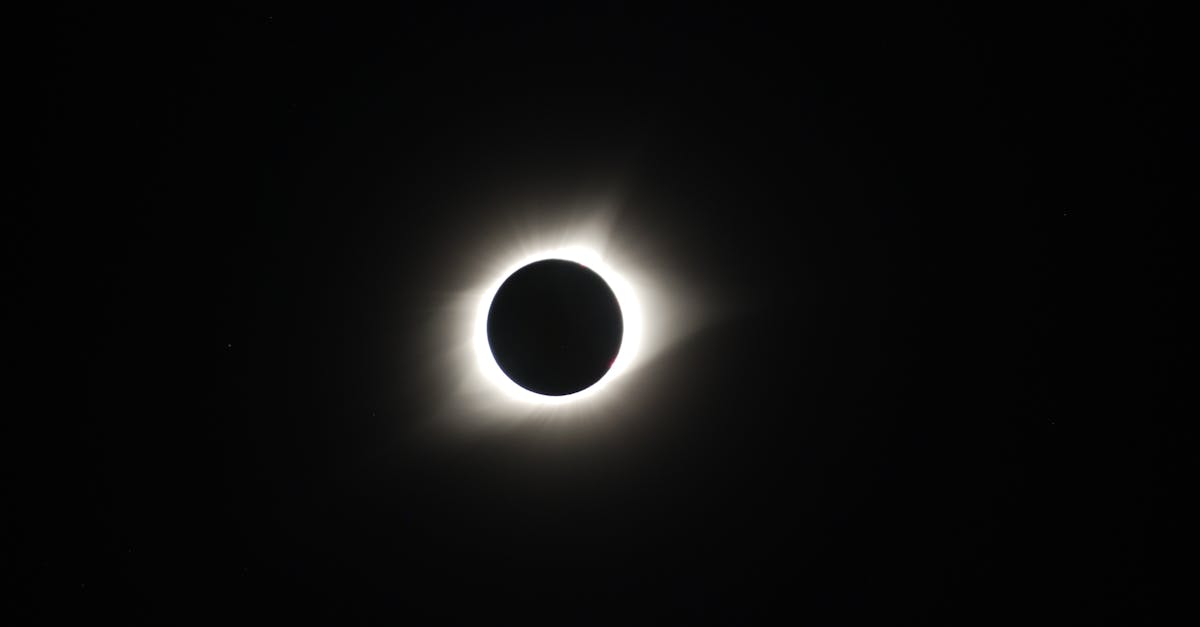
- NASA will use a jet to chase the total solar eclipse across the Arctic and Spain on August 12, 2026.
- The jet will fly at 460 mph to extend observation time of the corona.
- 86 balloons will be launched simultaneously to study how sudden darkness affects Earth's atmosphere.
On August 12, 2026, a total solar eclipse will sweep across the Arctic and parts of Spain. NASA has announced it will chase the phenomenon using a jet flying at 460 miles per hour.
The mission is designed to extend the time scientists can observe the Sun's corona—the outer atmosphere that is usually invisible. A ground observer sees totality for only a few minutes. From the jet, that window will stretch significantly longer.
A Jet in the Shadow of the Moon
The aircraft will fly along the path of totality, staying inside the Moon's shadow as it races across the Earth. This technique has been used by NASA before, but the 2026 eclipse offers a rare trajectory over land and sea.
Flying at 460 mph, the jet will match the speed of the shadow's movement. This allows instruments aboard to capture continuous data on the corona without interruption.
The corona is key to understanding solar activity, including solar flares and coronal mass ejections that can disrupt communications and power grids on Earth.
86 Balloons to Study Atmospheric Changes
While the jet chases the eclipse above, a fleet of 86 high-altitude balloons will be launched simultaneously. Their goal is to measure how sudden darkness alters Earth's atmosphere.
During a total eclipse, the temperature drops, winds shift, and clouds may dissipate or form. The balloons will carry sensors to record these changes in real time. It is one of the largest coordinated balloon campaigns ever attempted for a single eclipse.
Scientists hope this data will improve models of how solar radiation interacts with the atmosphere, which has implications for weather prediction and climate science.
Path of Totality: Arctic and Spain
The Moon's shadow will first touch the Earth in the Arctic region. From there, it will move southeast, crossing the northern Atlantic before reaching the coast of Spain.
Totality will be visible from parts of northern Canada, Greenland, Iceland, and northern Spain. Major cities in Spain, including Barcelona, are expected to experience a partial eclipse, while the path of totality passes over the Pyrenees and the Mediterranean coast.
NASA has not yet released the exact flight path of the jet, but it is expected to intercept the shadow over the Atlantic. Officials have confirmed that the aircraft will be equipped with spectrometers and high-resolution cameras.
The eclipse on August 12 will be the first total solar eclipse visible from Spain since 1900. It follows the 2024 total eclipse that crossed North America, which drew millions of spectators.
NASA's dual approach—using both a jet and balloon network—is part of a broader effort to study the Sun and its influence on Earth. The agency has been preparing for this event for over a year.
Weather will play a critical role. Clouds could block the view for both ground observers and the jet. The balloons will be launched regardless, as they can collect data even under overcast conditions.
The jet mission is expected to produce the longest continuous observation of a solar eclipse corona from an aircraft. The results will be compared with data from ground stations and satellites.
For now, teams are finalising instrument calibrations and checking balloon payloads. The next total solar eclipse after August 2026 will occur in 2027, crossing North Africa and the Middle East.