July's 'Buck Moon' Rises Globally, Sets Stage for Total Solar Eclipse
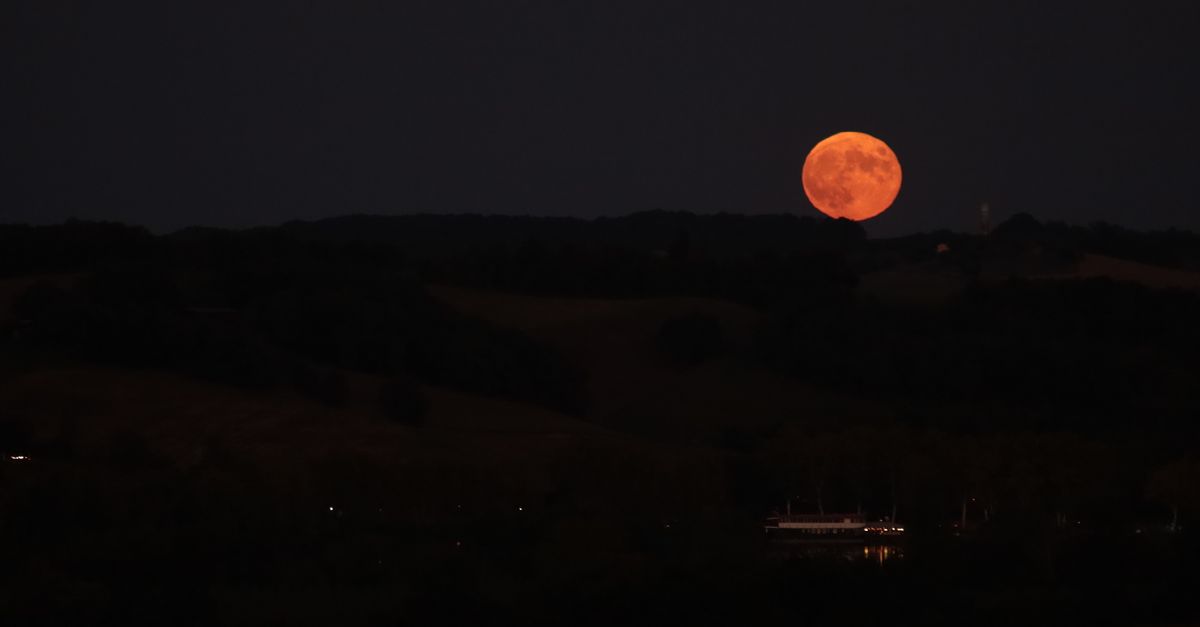
- The 'Buck Moon' reached peak illumination on July 30, 2026.
- Skywatchers worldwide captured stunning photos of the orange-tinted moon.
- This full moon precedes a total solar eclipse visible across parts of the globe next month.
- August 2026 will feature both a total solar eclipse and a partial lunar eclipse.
- The 'Buck Moon' name originates from the time when male deer antlers are in full growth.
Skywatchers across the globe turned their eyes upward this week as July's full 'Buck Moon' rose, casting an orange glow and delivering a spectacular prelude to a busy month of celestial events. The moon reached its peak illumination on July 30, 2026, drawing photographers and astronomers alike to capture its majestic appearance.
A Month of Eclipses Begins
The July full moon marks the start of a particularly active period in the night sky. August 2026 will feature a total solar eclipse, visible across parts of North America, Europe, and Africa, followed by a partial lunar eclipse. The 'Buck Moon' sets the stage for these events, as it occurred roughly two weeks before the solar eclipse, aligning the sun, moon, and Earth in a predictable cosmic dance.
Astronomers note that total solar eclipses are rare, occurring only once every 18 months or so from any given location. The upcoming eclipse is expected to attract millions of viewers worldwide, with many already planning travel to areas within the path of totality.
Capturing the Buck Moon
Photographers around the world shared breathtaking images of the orange-tinted moon rising over landmarks, coastlines, and countryside. In the United Kingdom, the moon appeared particularly large and vibrant due to atmospheric conditions, drawing crowds to hills and coastal viewpoints. Social media feeds were flooded with images of the moon perched behind historic buildings, wind turbines, and silhouetted trees.
Enthusiasts used telephoto lenses and tripods to capture the moon's craters and maria in sharp detail. The 'Buck Moon' gets its name from the time of year when male deer, or bucks, begin to grow their antlers. Other names for the July full moon include the Thunder Moon, reflecting the frequency of summer thunderstorms, and the Hay Moon, marking the hay harvest season.
What to Watch Next
For those who missed the Buck Moon, the next major event is the total solar eclipse on August 12, 2026. The path of totality will sweep from the Pacific Ocean, across Mexico, the United States, and into the Atlantic near Europe. Observers outside the path will see a partial eclipse.
Later in August, a partial lunar eclipse will be visible across much of the Eastern Hemisphere, including Europe, Africa, and Asia. Skywatchers are advised to check local timings and weather forecasts to ensure the best views.
The Buck Moon's rise has not only provided stunning photo opportunities but also reminded us of the predictable rhythms of our solar system. As the next month unfolds, the celestial show promises even more dramatic moments for those who look up.