NASA's Roman Telescope Set for August 30 Launch; How It Differs from Webb
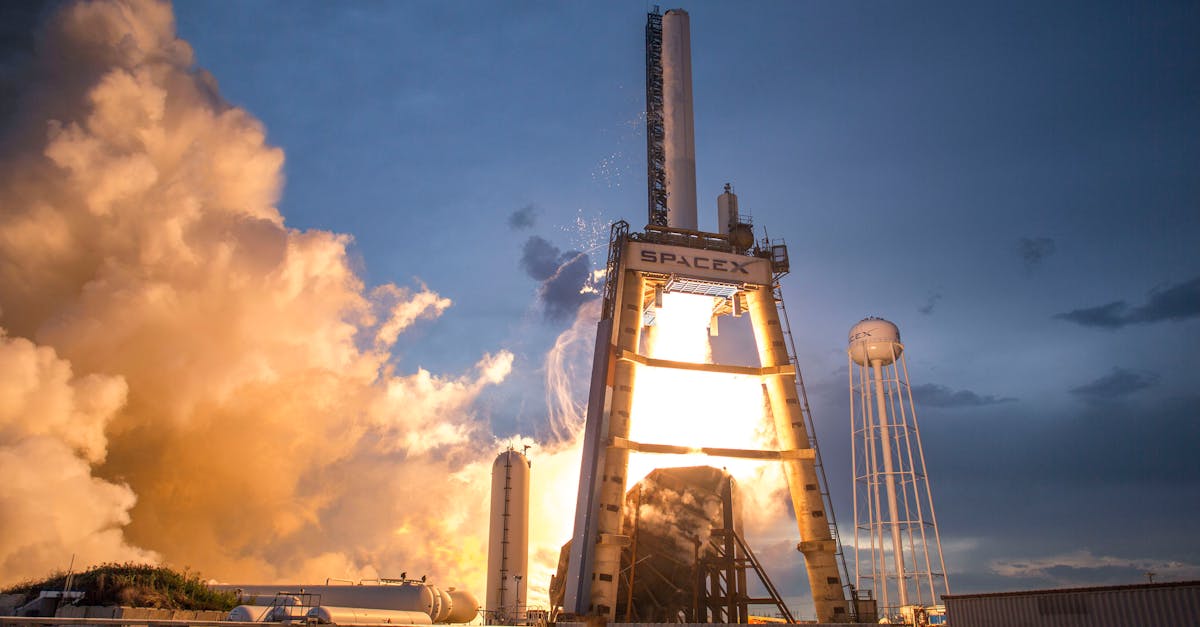
- Roman Space Telescope launch scheduled for August 30
- Roman will conduct wide-field surveys, unlike Webb's deep, narrow observations
- Mission aims to study dark energy, exoplanets, and infrared sky
- Named after Nancy Grace Roman, NASA's first chief astronomer
Next Great Observatory Ready for Liftoff
NASA is gearing up to launch its next flagship space telescope, the Nancy Grace Roman Space Telescope, on August 30. The mission, previously known as WFIRST, has been in development for over a decade and is now fully fueled and ready for its journey to a point one million miles from Earth.
The Roman telescope is named after Nancy Grace Roman, NASA's first chief of astronomy, often called the 'Mother of Hubble' for her role in championing the Hubble Space Telescope. Her legacy continues with this observatory, which promises to open a new window on the universe.
Wide Field vs. Deep Field: The Core Difference
The most significant difference between Roman and the James Webb Space Telescope (JWST) is their observational strategy. Webb is designed to look deeply into small patches of sky, capturing faint galaxies from the early universe in stunning detail. Roman, by contrast, is built for sweeping surveys.
Roman's field of view is about 100 times larger than Webb's infrared camera. This means it can capture vast cosmic landscapes in a single snapshot, covering enormous swaths of sky far more quickly. It's a complementary approach: Webb zooms in, Roman pans out.
What Roman Will Do That Webb Cannot
'It's going to do things that currently are impossible,' said a NASA scientist involved in the mission. Roman's wide-field capabilities will enable it to map dark matter, measure the effects of dark energy, and discover thousands of exoplanets using gravitational microlensing—a technique that Webb cannot efficiently perform.
The telescope will also conduct a high-latitude spectroscopic survey to probe the expansion history of the universe. This will help astronomers understand why the universe's expansion is accelerating, one of the biggest mysteries in modern physics.
Fueled and Ready for Late August Launch
NASA has completed fueling the spacecraft, a major milestone ahead of the launch window. The telescope will ride atop a Falcon Heavy rocket from Cape Canaveral, Florida. Once in orbit, it will undergo a commissioning phase before beginning its five-year primary mission.
Roman is equipped with a 2.4-meter primary mirror, the same size as Hubble's, but with instruments optimized for infrared observations. Its Coronagraph Instrument will directly image exoplanets by blocking starlight, a technology demonstration that could pave the way for future habitability studies.
A New Era of Cosmic Survey
Astronomers expect Roman to generate enormous datasets, with about 20 petabytes of data over its mission lifetime. This will make it a survey powerhouse, feeding discoveries for decades. The telescope's wide-field surveys will also provide targets for Webb to follow up on, creating a synergy between the two observatories.
The mission's emphasis on wide surveys marks a shift in space astronomy, from targeted observations to statistical studies of the universe. This approach is expected to yield breakthroughs in our understanding of galaxy formation, dark matter distribution, and planetary systems.
As launch day approaches, teams are completing final integration and testing. The launch date is set for August 30, pending weather and technical readiness. NASA has not yet announced any potential delays.
Once Roman is in space and its instruments are calibrated, the scientific community will gain a powerful new tool to explore the cosmos. The first images are expected within months after launch, and they could reshape our cosmic perspective.