PM Modi says he forgives those who abused him, urges guidance over anger
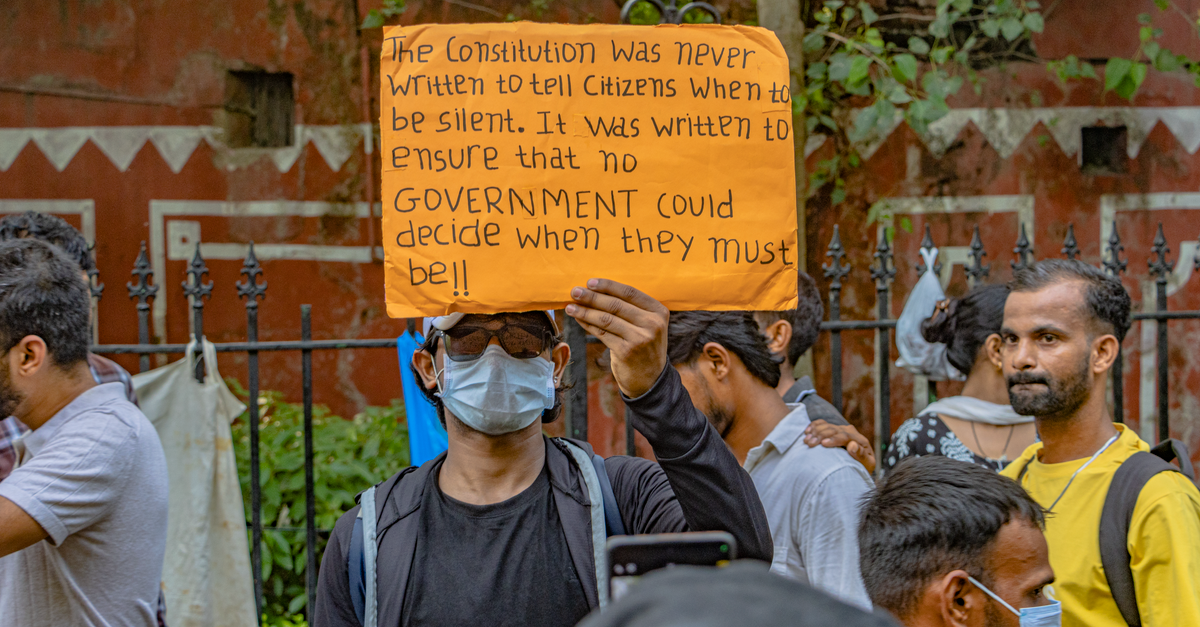
- PM Modi said he forgives those who abused him and his mother during recent protests.
- He described the language used by protesters as a 'culture shock', especially from young women.
- He asserted that abuses solve nothing and that society's role is to guide the youth, not condemn them.
Prime Minister Narendra Modi has said he is ready to forgive those who abused him and his mother during a recent confrontation at Jantar Mantar in New Delhi. In a video message that has since gone viral, Modi described the incident as a 'culture shock', particularly the foul language used by some young women protesters, but insisted that anger and retribution are not the answer.
"I want to forgive those who abused me," Modi said, adding that the abuse was directed not just at him but at his mother as well. "Abuses never solve anything. Our job is to guide them, not to punish them." The remarks mark a rare personal reflection from the Prime Minister on the growing hostility he has faced from certain sections of the public, especially the youth.
What happened at Jantar Mantar
The incident in question occurred earlier this week when a group of protesters, reportedly students, gathered at Jantar Mantar — a historic site in central Delhi that has long been a venue for demonstrations. According to multiple media reports, the crowd shouted slogans and used abusive language directed at the Prime Minister and his family. Video clips circulating on social media show heated exchanges between the protesters and security personnel.
The Prime Minister did not specify the exact nature of the protest or the demands of the demonstrators, but the timing has led to speculation that it may be linked to recent student-led agitations over educational policies or employment issues. Officials in the Prime Minister's Office have not confirmed any direct communication between Modi and the protesters, nor have they detailed the sequence of events that led to his video message.
Modi's reference to 'daughters' using 'foul language' has drawn particular attention. In his message, he expressed disappointment that young women, whom he called 'daughters of the nation', resorted to such language. "It hurt me deeply," he said, "not because they abused me, but because they forgot their own dignity." This statement has triggered a mixed response — some have praised his magnanimity, while others have criticised the remark as patronising.
The politics of forgiveness
Modi's choice to publicly forgive rather than condemn is a calculated political move, say observers. With general elections expected within the next two years, the BJP is keen to project an image of a leadership that is above petty insults. By framing the incident as a test of societal values rather than a personal attack, Modi is attempting to shift the narrative from confrontation to reconciliation.
However, the strategy carries risks. Critics argue that forgiveness without addressing the underlying grievances of the protesters — many of whom are educated but unemployed — rings hollow. Opposition parties have been quick to point out that Modi's message does not mention the issues that drove the protesters to Jantar Mantar in the first place. "Forgiveness is easy when you are not the one suffering," said one opposition leader on condition of anonymity, adding that the Prime Minister's words were "a distraction from real problems."
The BJP, for its part, has rallied behind the Prime Minister. Party spokespersons have highlighted Modi's 'large-heartedness' and contrasted it with what they call the 'hateful politics' of the opposition. Social media campaigns under hashtags like #ForgiveAndGuide have been trending, with many users sharing the video message and praising the PM's restraint.
A broader cultural debate
Beyond the immediate political calculus, Modi's remarks have ignited a wider debate about the language of protest in India. The Jantar Mantar incident is not isolated; in recent months, there have been several instances of protesters using crude slogans against political figures across the spectrum. Sociologists and commentators have noted a coarsening of public discourse, amplified by social media where outrage often trumps reasoned debate.
Modi's framing of the issue as a 'culture shock' suggests he sees this as a generational and moral crisis, not just a political one. His appeal to guide the youth rather than condemn them echoes traditional Indian values of mentorship, but it also sidesteps the question of whether the state itself has contributed to the anger. The Prime Minister did not elaborate on what 'guidance' would look like in practical terms, leaving room for interpretation.
Some analysts point out that Modi's response is consistent with his personal brand — a leader who projects stoicism in the face of adversity. From his years as Chief Minister of Gujarat to his tenure as Prime Minister, he has often used personal anecdotes and moral lessons to connect with the public. This latest message fits that pattern, blending vulnerability with authority.
What to watch
The coming days will reveal whether Modi's message of forgiveness translates into any concrete outreach to the protesters or their representatives. So far, there has been no announcement of a meeting or dialogue. Political observers will also be watching how the opposition leverages this moment — whether they can turn the narrative back to substantive issues like unemployment and educational reform, or whether the 'forgiveness' angle dominates the news cycle.
For the public, the question is whether this episode marks a turning point in civility or merely a momentary pause in an increasingly bitter political climate. As one political analyst put it, "Forgiveness is a noble sentiment, but in politics, it is also a weapon. The real test is what follows."