Inside the US town where cell phones barely work because scientists are listening to the universe
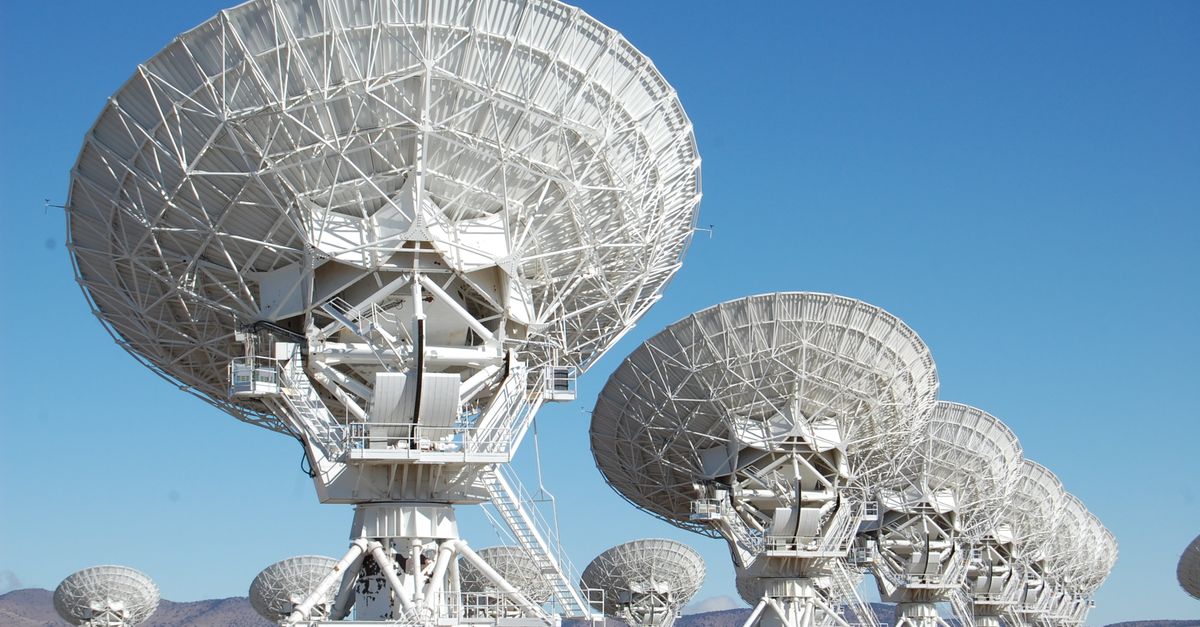
- The National Radio Quiet Zone spans parts of West Virginia and Virginia, restricting radio emissions.
- Residents live with limited cell service and internet to protect the Green Bank Observatory's telescopes.
- The zone has existed since 1958, and its restrictions are a model for radio spectrum management.
- Local life adapts with landlines, CB radios, and a community that understands the scientific mission.
A town that chose silence
In the heart of the Appalachian Mountains, there is a place where your smartphone is more useful as a paperweight. The town of Green Bank, West Virginia, sits inside the National Radio Quiet Zone, a 13,000-square-mile area where radio emissions are heavily restricted. Here, cell towers are scarce, and the few that exist are tuned to a narrow band that keeps interference to a minimum.
The reason is the Green Bank Observatory, home to the world's largest fully steerable radio telescope. Its giant dish listens for faint signals from distant galaxies, pulsars, and possibly alien civilizations. Any stray transmission, even from a microwave oven or a Bluetooth earpiece, can drown out the cosmic whispers.
Life without constant connectivity
Residents in the zone have learned to live differently. Instead of streaming videos or scrolling through social feeds, many rely on landlines and CB radios. The local library offers dial-up-like internet, and some homes have satellite connections that are carefully shielded.
It's not that the government has banned cell phones outright. Rather, the Federal Communications Commission restricts certain frequencies, and carriers have been discouraged from building infrastructure that would create significant radio noise. In practice, this means that if you drive into Green Bank, your phone will likely show no bars, or at best a single, flickering signal.
A trade-off with cosmic stakes
The quiet zone has existed since 1958, when the observatory was established. The idea was simple: protect the scientific equipment from human-made interference. Over the decades, the zone has become a sanctuary for radio astronomy, allowing researchers to study everything from the afterglow of the Big Bang to the rotation of distant stars.
For locals, the restrictions are a point of pride. Many say they don't miss the constant pings and notifications. They see themselves as guardians of a rare resource—silence in a noisy world. As one resident told a visiting journalist, "We're not cut off; we're tuned in to something bigger."
The quiet zone's modern challenges
But the quiet zone is not without its tensions. As technology advances, more devices emit radio waves, from smart meters to drones. The observatory has had to work with regulators and manufacturers to ensure that new products don't breach the zone's integrity.
Recently, the Green Bank Observatory has also become a hub for research into the search for extraterrestrial intelligence (SETI). Scientists here use the telescope to scan the skies for artificial signals, a project that requires absolute quiet. The town's quirky lifestyle has even drawn tourists and curious visitors, who come to see the giant dish and experience a place where the universe takes precedence over the internet.
What to watch
As 5G and satellite internet expand, the National Radio Quiet Zone will face increasing pressure. The next few years will test whether the balance between technological progress and scientific discovery can hold. For now, Green Bank remains a reminder that some things are worth listening to—and that sometimes, you have to turn off the noise to hear them.