NASA Extends Voyager 2's Life With Clever Power Maneuver
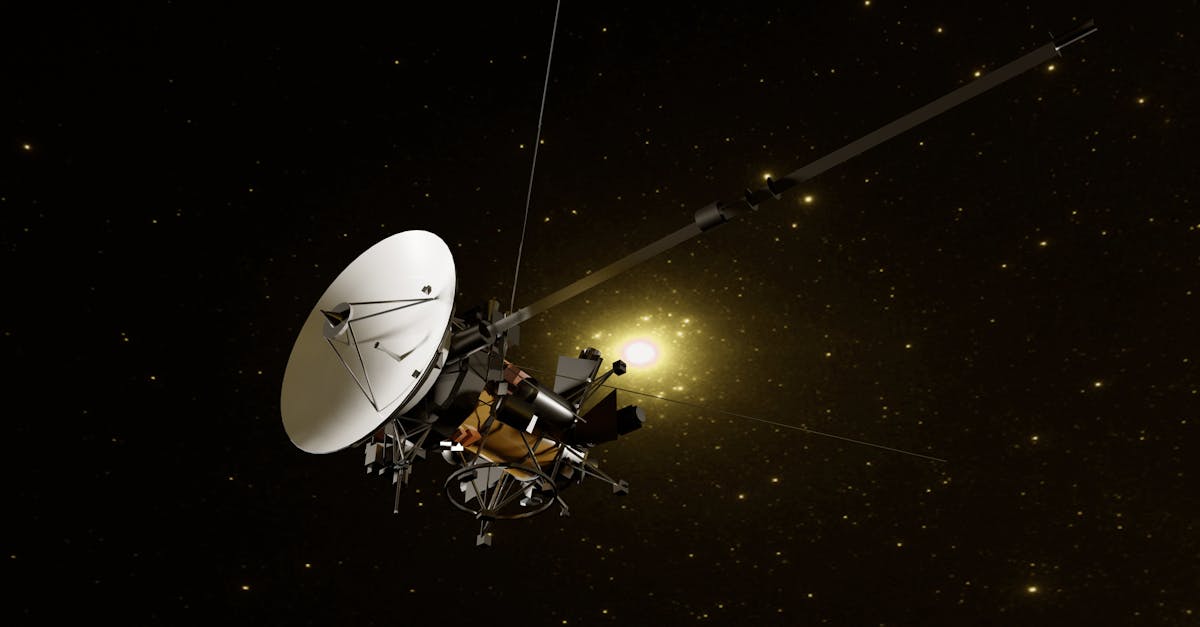
- NASA engineers devised a power-saving maneuver to extend Voyager 2's mission by a year.
- The probe is currently 21.37 billion kilometers from Earth, traveling interstellar space.
- The same technique may be tested on Voyager 1 in the future.
- Voyager 2 continues to send valuable data from beyond the heliosphere.
NASA has pulled off a resourceful maneuver to keep the aging Voyager 2 spacecraft alive for another year, even as it drifts more than 21.37 billion kilometers from Earth. The probe, now 48 years old, continues to send back valuable data from interstellar space, but its power supply has been dwindling. Engineers at NASA's Jet Propulsion Laboratory had to think fast to ensure the mission doesn't end prematurely.
The solution, described by some as a 'Big Bang' maneuver, involves tapping into a reserve power source that was previously set aside for safety. By reallocating this energy, the team has effectively given Voyager 2 a fresh lease on life, allowing its scientific instruments to keep operating for at least another year.
A Clever Power Rerouting
Voyager 2 relies on a radioisotope thermoelectric generator (RTG), which converts heat from decaying plutonium into electricity. Over the decades, the RTG's output has slowly declined, forcing engineers to shut down non-essential systems. But now, they've found a way to use a small amount of power that was once kept in reserve for a safety mechanism.
This reserve was originally meant to protect the spacecraft from voltage spikes that could damage its systems. By carefully rerouting that power to the science instruments, NASA has managed to extend the mission without compromising safety. The maneuver was risky, but it appears to have paid off, at least for now.
What This Means for Science
The extra year of operation is not just about keeping a historic spacecraft alive; it's about continuing to gather rare data from the edge of our solar system. Voyager 2 is one of only two human-made objects to reach interstellar space, the region beyond the Sun's influence. Every additional month of data helps scientists understand cosmic rays, magnetic fields, and plasma waves in this unexplored territory.
The probe's instruments, though old, are still functional. Engineers had to make tough choices about which systems to keep running, but the science payoff remains significant. Each new measurement adds to a legacy that began with the spacecraft's launch in 1977.
The Voyager 1 Question
Now that the maneuver has worked for Voyager 2, attention is turning to its twin, Voyager 1. That spacecraft is even farther away, at over 24 billion kilometers from Earth, and faces similar power constraints. NASA engineers are studying whether the same trick can be applied to Voyager 1, which has already outlived all expectations.
But the 'Big Bang' maneuver is not without risks. It involves using a safety reserve, which means there's less margin for error if something goes wrong. Engineers will need to monitor Voyager 2 closely to ensure the new power configuration doesn't cause unexpected issues. If it holds, Voyager 1 could get a similar boost in the coming years.
A Mission That Keeps Giving
Voyager 2's journey has been remarkable. Launched in 1977, it flew past Jupiter, Saturn, Uranus, and Neptune, becoming the only spacecraft to visit the latter two. In 2018, it crossed the heliopause, the boundary where the Sun's solar wind gives way to interstellar space. Since then, it has been sending back data from a region no other probe has reached.
The mission's longevity is a testament to the durability of its design and the ingenuity of the teams that support it. Even as the spacecraft ages, its signals take over 19 hours to reach Earth, traveling at the speed of light. Every message is a reminder of how far human engineering has come.
NASA has not confirmed how long the new power configuration will last beyond the projected one-year extension. But for now, the team is optimistic. The spacecraft's health will be monitored closely, and any anomalies will be addressed as they arise.
Looking ahead, the success of this maneuver could set a precedent for managing other deep-space missions. As Voyager 2 continues its lonely voyage, the next year will be crucial to see if the gambit pays off in full.