1967 Space Flash: Accidental Discovery of Cosmic Mystery
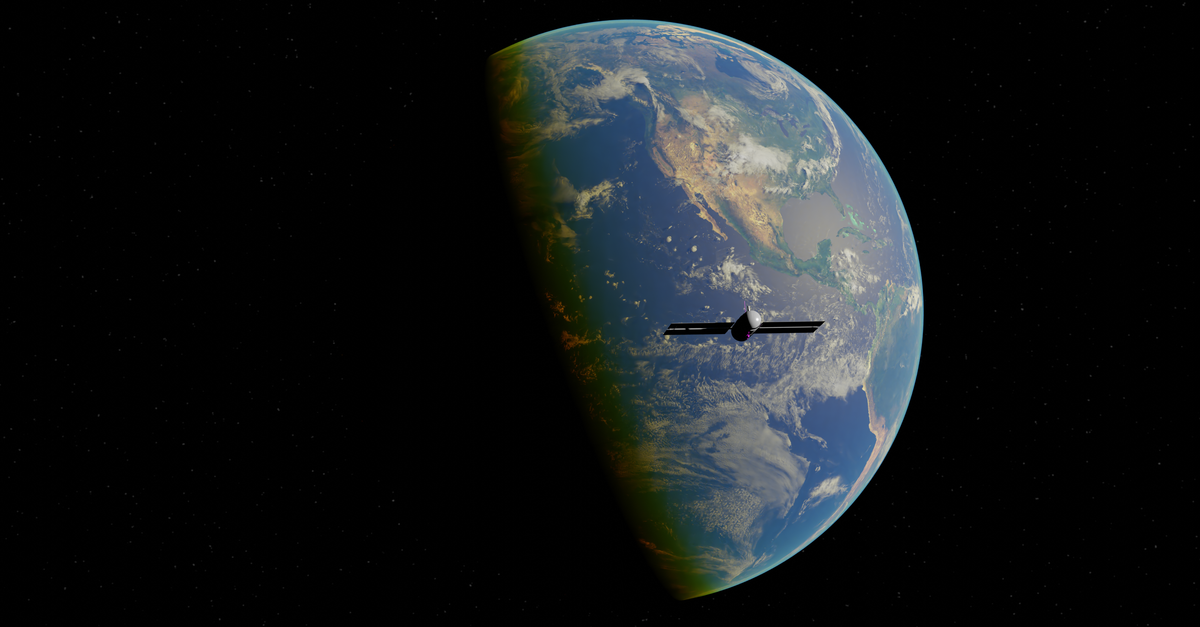
- US Vela satellites detected a gamma-ray flash in 1967
- The flash was initially thought to be a secret nuclear test
- It turned out to be the first gamma-ray burst ever recorded
An Unlikely Signal from the Cosmos
In 1967, a pair of American satellites, designed to police the skies for clandestine nuclear tests, picked up a flash of energy that would puzzle scientists for decades. The Vela spacecraft, orbiting Earth on a mission to enforce the Partial Test Ban Treaty, recorded a sudden burst of gamma rays—but not from any human detonation. The signal came from deep space, and it was entirely accidental.
For years, the data remained classified, tucked away in military archives. When analysts finally ruled out a Soviet bomb, they realised they had stumbled onto something far stranger: the first recorded gamma-ray burst, a phenomenon now known to be one of the most violent explosions in the universe.
A Cold War Tool Becomes a Telescope
The Vela satellites were not built for astronomy. Their job was to detect the X-rays, gamma rays, and neutrons that a nuclear explosion would emit, ensuring no nation secretly tested weapons in space or the atmosphere. But on that day, the instruments caught a pulse that did not match any known nuclear signature. It was brief, intense, and came from a direction no satellite had ever flagged before.
Scientists at Los Alamos National Laboratory, who operated the Vela programme, were the first to notice the anomaly. They spent years checking and rechecking the data, trying to rule out a malfunction or a misinterpreted event. Eventually, they concluded the flash was real—and it had originated beyond the solar system.
What Were Gamma-Ray Bursts?
Gamma-ray bursts, or GRBs, are now understood as cataclysmic events—often the collapse of massive stars or the merger of neutron stars. They release more energy in a few seconds than the Sun will emit in its entire lifetime. But in 1967, this concept did not exist in mainstream science.
The discovery was kept under wraps until 1973, when the findings were finally published in the Astrophysical Journal. Even then, the scientific community was slow to accept the idea. It took another two decades and more observations from dedicated satellites to confirm that these bursts were indeed cosmic, not terrestrial.
A Legacy of Serendipity
The accidental nature of the discovery is a reminder of how often science advances by chance. The Vela satellites were never meant to explore the universe, yet they opened a new window onto its most extreme phenomena. Today, gamma-ray bursts are studied by missions like NASA's Swift and Fermi telescopes, which trace their lineage back to that single, unexplained flash.
For India, the story also resonates with the country's growing interest in space science. The Indian Space Research Organisation (ISRO) has launched missions like AstroSat, which observes such high-energy events, adding to a global effort that began with a military satellite in the Cold War era.
What to Watch Next
Astronomers continue to monitor gamma-ray bursts, hoping to catch one in real time with ground-based telescopes. The next big discovery could come from any direction—just like in 1967, when a nuclear watchdog stumbled onto a cosmic mystery that still fascinates us today.